
A stiff knee first thing in the morning. Fingers that do not wish to bend. A brief stroll that appears considerably longer than it ought to. Rheumatoid arthritis may manifest itself in normal life in little yet irritating ways.
If that sounds familiar, you may be wondering, is physical therapy good for rheumatoid arthritis?
It can be. The physical therapy will not treat the rheumatoid arthritis; however, it will enable you to move and allow you to continue doing those things that you usually do.
Why Movement Can Become Difficult With RA
Rheumatoid arthritis, also known as RA, is the inflammation of the joints. The joints can develop pain, swelling or stiffness.
When pain becomes a thing, the natural response is to cease using it.
That can pass in the short run. However, being inactive too long will make the muscles weaker and the joints even more stiff. Then normal things, like walking stairs or getting up out of a chair, might begin to feel more difficult.
One of the ways to address these issues without just driving through the pain is physical therapy.
What Does a Physical Therapist Actually Do?

You probably will not walk into your first appointment and immediately start doing a long workout.
A physical therapist usually needs to see what is bothering you first.
Can you bend the painful joint comfortably? Has your balance changed? Are you struggling to walk as far as you used to? Maybe your hands are fine, but your knees make stairs difficult.
Those details matter.
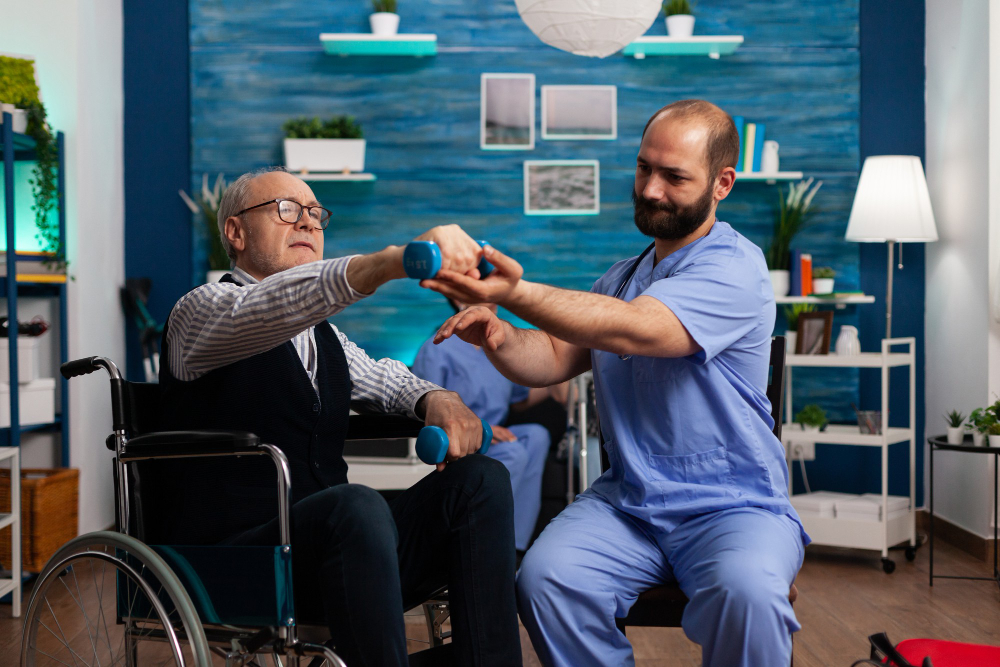
The therapist can then choose exercises based on what you can comfortably manage. That may include gentle stretches, simple strength exercises, balance practice, or low-impact activity.
It is not about exercising as hard as possible. It is about keeping your body moving without placing needless strain on sore joints.
Physical Therapy May Make Daily Tasks Easier
The benefits are often quite practical.
Perhaps getting out of bed in the morning is difficult because your knees feel stiff. Maybe carrying shopping bags bothers your wrists. Or you have slowly stopped taking walks because your joints begin hurting too soon.
Physical therapy may help improve strength, flexibility, balance, and movement. As these areas improve, some everyday activities may become easier too.
Progress can be small at first. That is still progress.
Being able to walk for another five minutes or move a stiff joint more comfortably can make a noticeable difference to your day.
What If You Are Having an RA Flare?
RA has good days and bad days.
An exercise that feels fine one week might be uncomfortable when a joint is swollen the next. You do not have to and need not follow quite the same routine day after day.
Light activity or smooth movements may be recommended to you by your therapist during a flare. As soon as the symptoms subside, you can resume exercises gradually.
Pain cannot be just overcome. If an exercise repeatedly makes a joint hurt more, tell your therapist.
Physical Therapy Is Not a Replacement for RA Treatment
There is one thing worth making clear.
Physical therapy does not treat the underlying cause of rheumatoid arthritis. RA is an autoimmune condition and often needs medical treatment to control inflammation and protect the joints.
Physical therapy has another job. It helps you work on movement, strength, balance, and everyday physical function.
For many people, both forms of care are useful.
Expert Physical Therapy Care at Magnet Health
Magnet Health Physical Therapy in the Bronx provides care based on each patient’s movement and physical needs. The team works with patients on areas such as mobility, flexibility, strength, and day-to-day function.
Is Physical Therapy Worth Trying for RA?
Yes, to most individuals.
You do not even have to wait till you can hardly move. Once the stiffness, weakness, or discomfort in the joint is already beginning to put a strain on normal life, it might be worthwhile to discuss with your doctor physical therapy.
This is not aimed at eliminating rheumatoid arthritis. Physical therapy is not able to do that.
The end is far more practical: to keep you in the flow, make you stay strong, and make some everyday aspects of the day a little bit easier to handle.