

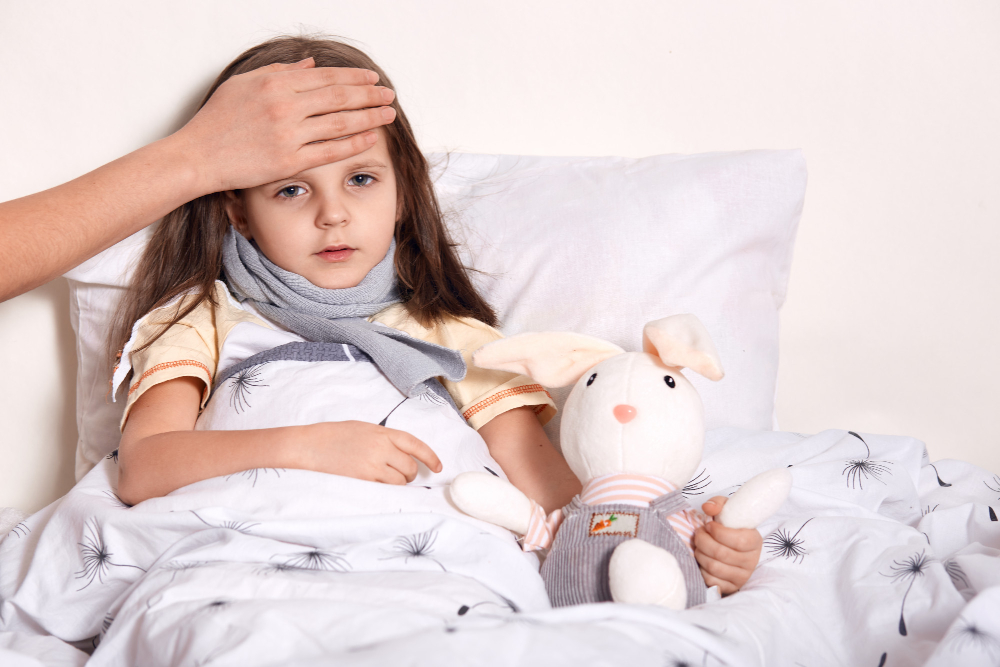
Your child wakes up sneezing. Their nose is stuffy, their eyes are watery, and they seem a little tired. Then you touch their forehead and it feels warm. Naturally, you may wonder, can allergies cause a fever in children?
In most cases, they don’t. Allergies can cause plenty of uncomfortable symptoms, but a true fever is usually not one of them. If your child has a fever along with sneezing or a runny nose, there could be another reason behind it.
Let’s look at what may be happening.
Can Allergies Cause a Fever in Children?
Allergies happen when the body reacts to something harmless as though it were a threat. Pollen, dust, mold, pet dander, and certain foods can all trigger a reaction.
In children, allergies may cause:
- Lots of sneezing
- A runny or blocked nose
- Itchy, watery eyes
- An itchy nose or throat
- Coughing
- Skin irritation or rashes
One thing that usually does not belong on that list is fever.
A child with allergies may look tired or feel uncomfortable, especially after a poor night’s sleep. They may even feel warm when you touch them. But that does not always mean their temperature is actually high. A thermometer can help you know for sure.
Why Does My Child Have Allergies and a Fever?
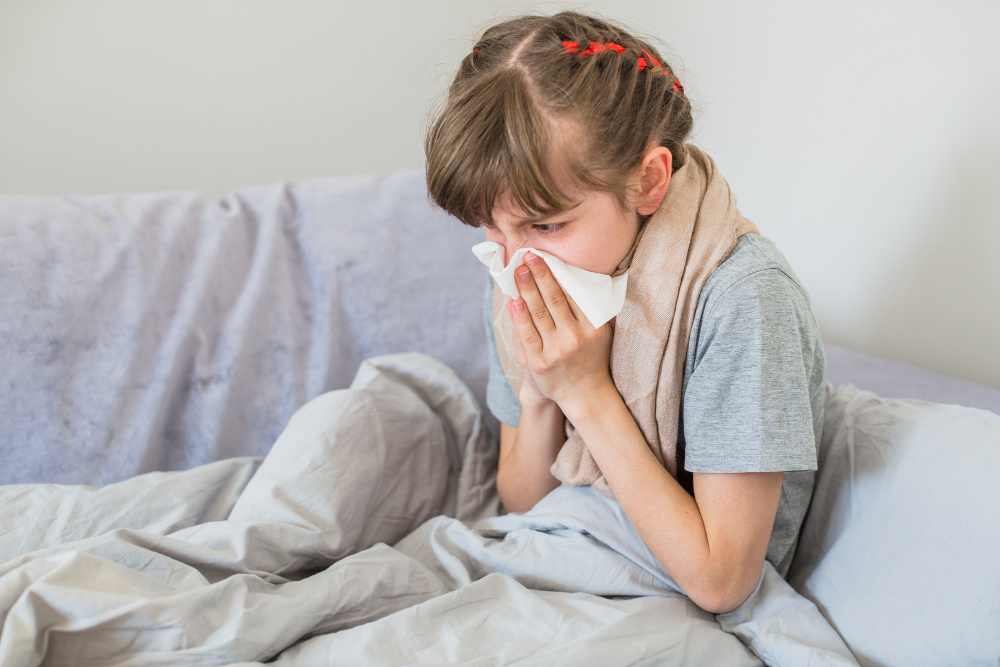
Sometimes, two things are happening at once.
Your child may have seasonal allergies and pick up a cold or another infection at the same time. This can be confusing because allergies and colds share several symptoms.
Look at the bigger picture. Is your child complaining of a sore throat? Are they unusually tired? Do they have chills, body aches, or less interest in food? These signs, especially when there is a fever, may suggest an infection rather than allergies alone.
Is It an Allergy or a Cold?
It is not always easy to tell, particularly during the first day or two.
Allergies often cause repeated sneezing and itchy eyes. The nose may run, but the mucus is often clear. Symptoms can also appear after your child spends time around a particular trigger, such as pollen, dust, or pets.
A cold can feel different. Your child may seem more tired than usual. A sore throat or fever may appear, and the symptoms often change over several days.
One simple clue? Itching points more towards allergies, while fever points more towards an illness.
Still, symptoms can overlap. If you are unsure, a pediatrician can help work out what is causing them.
Can Allergies Make a Child Feel Feverish?
They can make a child feel unwell, yes.
Imagine trying to sleep with a blocked nose, itchy eyes, and constant sneezing. After a restless night, your child may wake up cranky and exhausted. They might complain that they feel hot or simply “not good.”
That is different from having an actual fever.
Before assuming your child has one, check their temperature with a thermometer.
When Should You See a Pediatrician?
A mild runny nose or occasional sneezing may not be a reason to worry. Fever, however, deserves closer attention.
Talk to a pediatrician if the fever continues, keeps coming back, or your child seems to be getting worse. Seek medical care if there are concerning symptoms such as trouble breathing, dehydration, repeated vomiting, severe tiredness, or unusual behaviour.
Babies and very young children may need medical advice sooner when a fever appears.
Pediatric Care at Magnet Health
Not sure whether your child is dealing with allergies, a cold, or something else? Magnet Health’s pediatric care in the Bronx offers care for a range of childhood health concerns, including allergies, asthma, respiratory infections, and common illnesses. Parents can also visit for routine checkups, vaccinations, preventive care, and support for ongoing health needs.
Final Thoughts
So, can allergies cause a fever in children? Usually, no.
Sneezing, itchy eyes, a stuffy nose, and coughing can all happen with allergies. Fever is different. When it appears, another illness or infection may be responsible.
Instead of guessing, check your child’s temperature and pay attention to how they are acting. If something does not seem right or the fever continues, speak with a pediatrician. It is always better to understand what is actually causing the symptoms before deciding what your child needs.