
Yes, babies can develop yeast infections. The most frequently occurring yeast infections in babies are oral thrush and diaper rash. However, on rare occasions, the little ones also suffer from more severe infections; examples include invasive candidiasis. It is more common in premature babies. Read through the section below to learn more about these yeast infections.
Oral Thrush in Babies
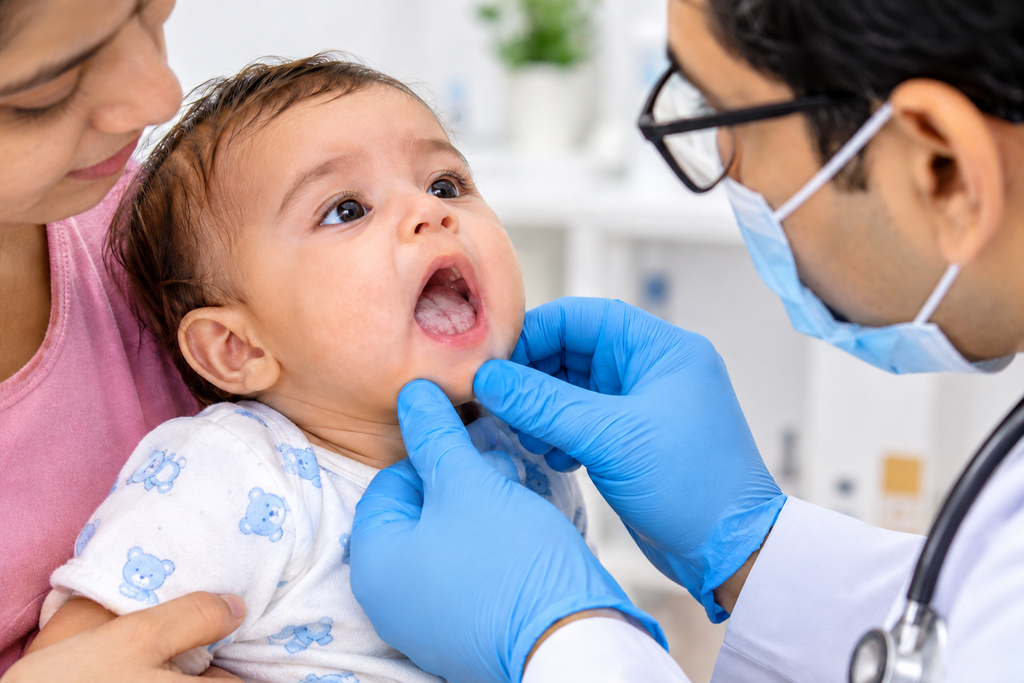
About 45 to 65% of infants naturally have Candida species in their oral cavities. These organisms are part of the normal microflora of infants and often do not cause symptoms. Of these, around 2 to 5% have Candida albicans in their oral cavities, which can lead to thrush. Around 5 to 7% of these cases occur when the baby is in its initial months. Another 14% of cases occur within the 4th week of the baby’s life.
Detecting oral thrush in babies is usually easy. Here are a few common signs:
- Yellowish, White, or Grey Spots: These spots or patches appear on the inner cheeks, tonsils, roof of the oral cavity, tongue, or gums of the baby. These patches typically look like cottage cheese.
- Patches That Don’t Go Away After Wiping: If the patches inside the oral cavity are oral thrush, they will not go away upon wiping. You will also not be able to brush them away using your fingers (make sure you clean your fingers thoroughly before attempting the process). Instead, gentle rubbing will turn the mucosa beneath the thrush red; there may also be slight bleeding.
- Feeding Issues: You may not notice the patches if they are not big enough. However, if you see your little one show fussiness when you try to feed him/her, consider checking the baby’s oral cavity thoroughly. Crying during feeds is also a sign to watch for.
- Diaper Rash That Refuses to Subside: When your baby has the above symptoms along with persistent nappy rash, the problem is most likely caused by a yeast infection.
- Symptoms in Nursing Moms: It’s common for yeast infection causing oral thrush in babies to pass to the mother’s nipples and vice versa. Mothers should get their babies checked for yeast infection the moment they see their nipples get sore or cracked and have a burning sensation there. The infection can also cause shooting pain inside the breast during or immediately after feeds.
Yeast Diaper Rash in Babies
Diaper rash is extremely common in babies. Statistics suggest that more than 50% of babies have diaper rash at least once while they are in diapers. The problem is more common in babies aged between 9 months and 1 year. However, in babies using diapers, it can occur at any age.
Diaper rash turns into yeast rash when it’s infected with a fungus called Candida albicans. Diaper rash that doesn’t subside after 3 days has a greater chance of getting infected with the fungus.
Common signs of yeast diaper rash are:
- Rashes that appear as deep or bright red/pink patches and look shiny are often the result of a yeast infection.
- Yeast rashes typically affect creases and skin folds around the baby’s thighs and groin.
- Satellite lesions, i.e., small and separate red pimples or bumps, are common indicators of yeast diaper rash. They appear in the area surrounding the primary red patch or, at times, even around normal skin.
- Diaper rash that doesn’t go away after applying barrier creams and increasing the frequency of diaper changes is most likely infected by Candida albicans.
- If the little one has oral thrush and diaper rash at the same time, there are high possibilities that the rash is the result of a yeast infection.
Invasive Candidiasis in Babies
Invasive candidiasis is an extremely serious yeast infection. The good news is that it’s not as common as the above two types. Its incidence is more frequent among premature babies and babies admitted to NICUs due to excessively low birth weight.
According to recent studies, 1% of premature babies weighing between 1000 and 1,500 grams develop the infection. The percentage climbs to 3% for babies weighing between 750 and 1000 grams at birth.
The incidence rate of invasive candidiasis is notably higher in middle- and low-income nations. What’s alarming is that around 20 to 50% of premature babies with the infection die. It makes prevention or early detection of invasive candidiasis extremely important.
If you are in the Bronx, you can protect your little one from this deadly infection as well as other forms of yeast infection by seeking treatment from a pediatrician at Magnet Health. The multispecialty clinic is represented by the best pediatricians in the United States.
Here are a few common symptoms of invasive candidiasis in babies:
- Abnormal body temperature (high or low)
- Excessive fussiness
- Refusal to feeds
- Poor respiratory function
- Low blood pressure
- Low platelet count
Conclusion
Parents must never ignore any of the above conditions. They should get the baby checked by a qualified and experienced pediatrician the moment they notice the first sign. Routine doctor visits are also useful in preventing yeast infections in babies.