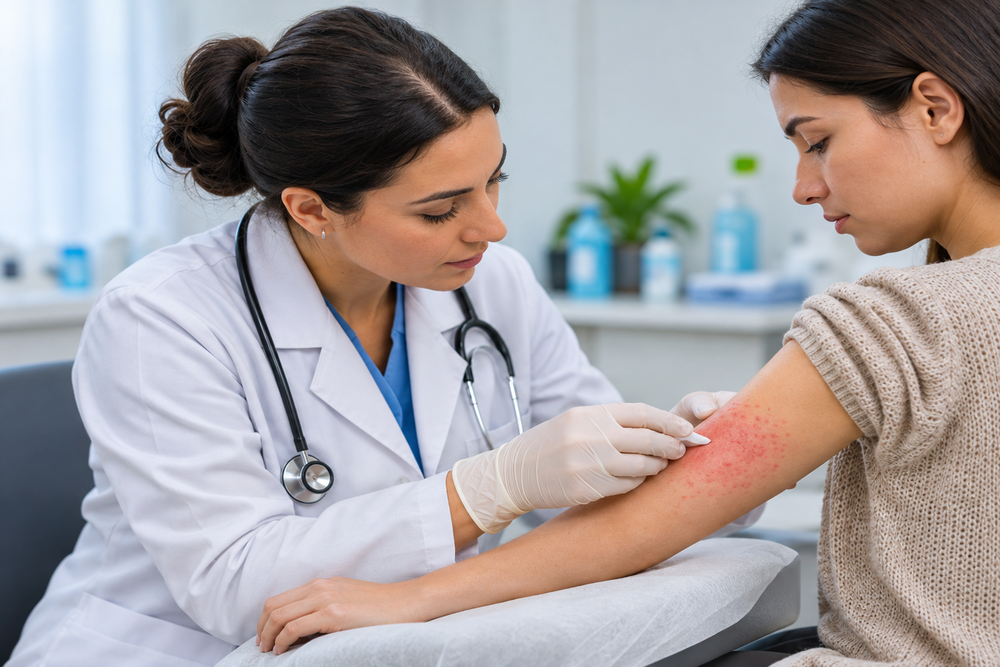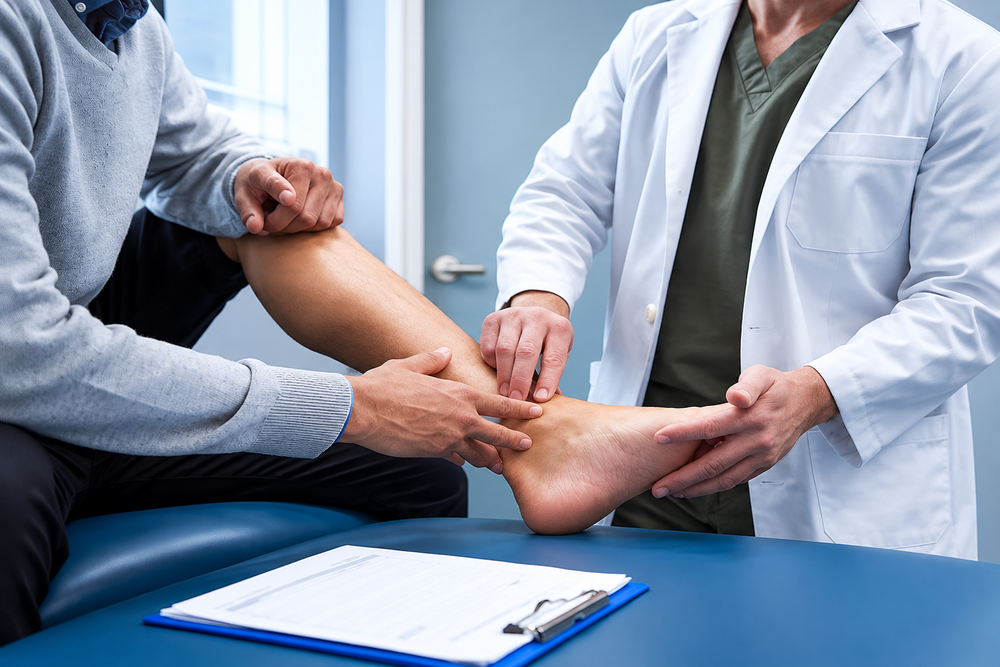

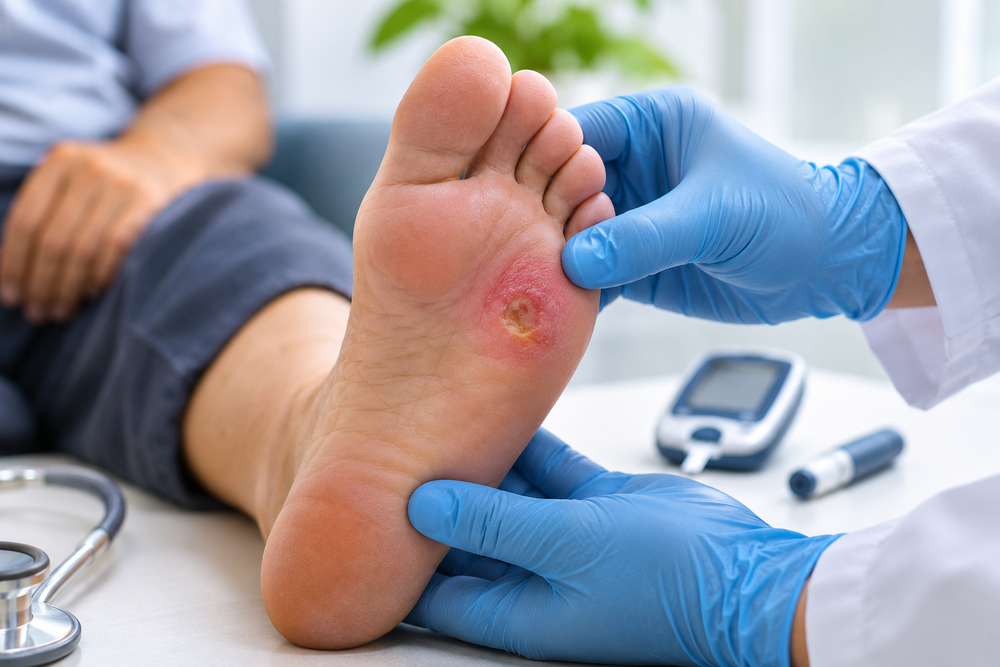
A foot blister may not seem like a big deal. However, if you have diabetes, it can develop into a significant issue that goes unnoticed or doesn’t heal. So, can diabetes cause foot sores? The short answer is yes; this chronic condition can cause nerve damage and constrict blood vessels, making foot wounds difficult to notice and even slower to heal.
Recognizing early signs can prevent serious complications.
Why Does Diabetes Cause Foot Sores?
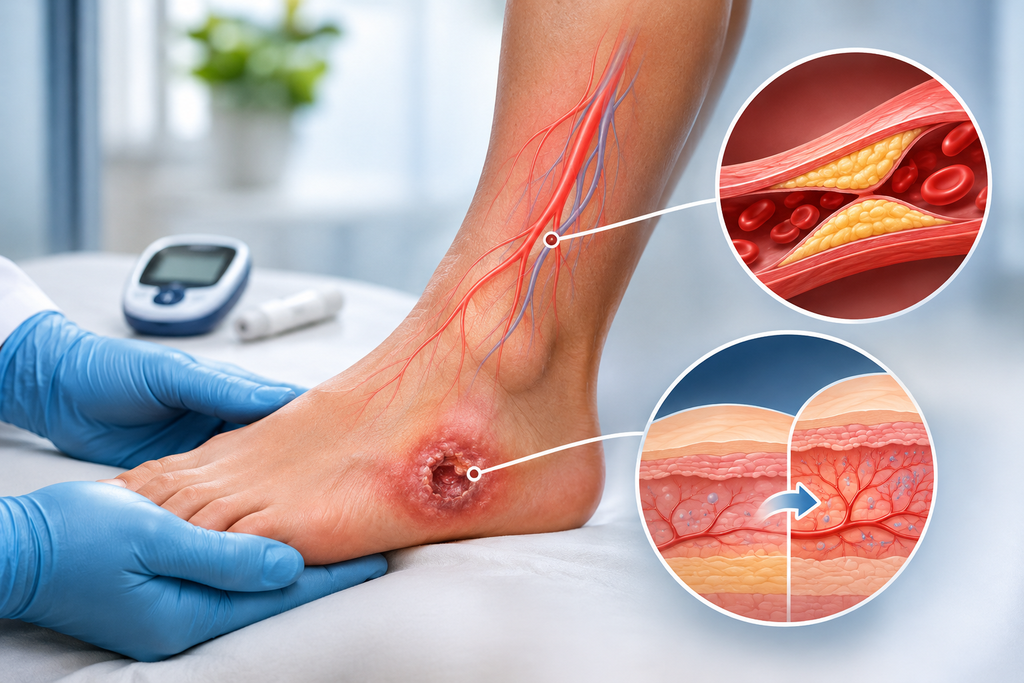
Having high blood sugar can impact your feet in these two ways:
- Nerve damage: Diabetic neuropathy can lessen sensation in your feet. You may not feel a blister from new shoes, a small cut or a pebble in your shoe. Friction can make the injury worse.
- Poor circulation: Diabetes can cause blood vessel disease that may restrict blood flow. This can deprive the skin of necessary oxygen and nutrients and slow wound healing.
A wound which is left unnoticed may evolve into an infected wound or can become worse, leading to a diabetic foot ulcer.
What Are the Early Signs of Diabetic Foot Sores?
Sometimes a sore is not painful when there is damaged nerve tissue. Some of the things to look for are:
- Blisters, cuts or cracks that don’t heal
- Redness, swelling or warmth around a wound
- Drainage, unusual odour, or staining on socks
- Thick calluses, particularly with dark spots underneath
- Changes in skin colour or temperature
- Tingling, burning or numbness in the feet
Look at the soles of your feet and between your toes as well. Try using a mirror to look at hard-to-reach areas.
Are Diabetic Foot Sores Dangerous?
Not all sores are life-threatening, but don’t take the chance of ignoring one. An open wound can be a gateway for infection, causing bacterial infiltration. Serious infections can get you hospitalized or even lead to you losing the limb.
Contact a healthcare provider as soon as possible if you develop a new sore on your foot. Seek prompt medical care if you have spreading redness, pus, fever, increased swelling, or skin becoming black. Do not wait until your wound begins to be painful.
How Are Diabetic Foot Sores Treated?
Management will vary depending on how deep the wound is, if infection is present and how well blood is reaching the foot. A doctor or nurse may:
- Clean and dress the wound and remove all unhealthy tissue, where this is possible.
- Either suggest special footwear or pressure relief on the sore.
- Prescribe antibiotics if an infection is diagnosed.
- Assess blood flow, nerve sensation and control of blood sugar.
- Coordinate with specialist wound or vascular management for more complex cases.
- Don’t try to peel away calluses with harsh chemicals or manage an open ulcer yourself.
How Can You Prevent Foot Sores With Diabetes?
Simple daily habits can reduce your risk.
- Examine your feet daily. Look for: cuts and blisters, redness and changes in the skin.
- Wash and dry carefully. Pat dry between the toes and use moisturizer if skin is dry, but not between the toes.
- Wear snug-fitting shoes and clean socks. Check your shoes for any abnormalities before putting them on, and refrain from walking barefoot.
- Blood sugar control. Stick to your doctor’s orders.
- Get foot exams regularly. Have your feet examined at each routine visit and have a complete foot exam at least once a year. Your examiner may need to do a more complete foot exam more often if you have high-risk factors.
Diabetic Foot Care at Magnet Health NY
If you’re a Bronx resident with diabetes, podiatry appointments can catch issues early on. At Magnet Health NY, podiatrists provide diabetic foot screenings, comprehensive foot and ankle examinations and general podiatry care to prevent the development of wounds or other issues. We can examine your feet and ankles for circulation, sensation and other physical changes. Reach out to Magnet Health NY for your podiatry appointment.
Take Foot Sores Seriously
It can present as a sore on the foot, but if caught early and monitored regularly, it can make a real difference. Check your feet daily, report any new sore promptly and keep up with your regular diabetes appointments. Even a small wound deserves attention when healing or sensation is affected.