
Are you bothered by ugly acne scars? If yes, it’s high time you visit a dermatologist and undergo the right treatment for your problem. Indeed, medicated creams and ointments are available that can help you reduce some of the marks. However, to see the best results, you must undergo cosmetic treatments.
The two most common cosmetic treatments used for acne scar removal are microneedling and chemical peels. Read through the section below to understand which one is better for you.
Introduction to the Procedures
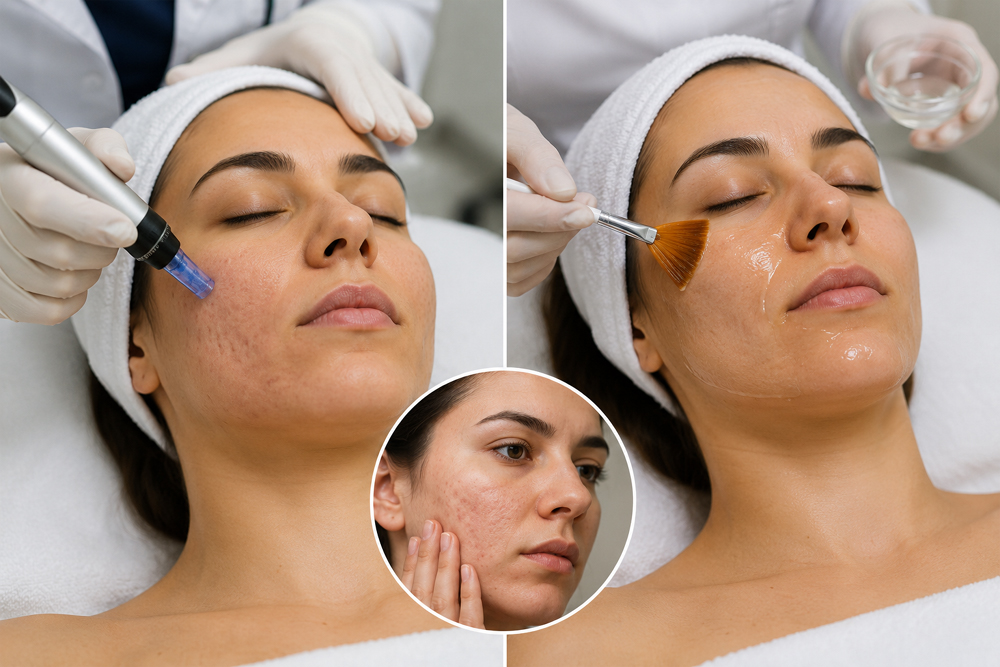
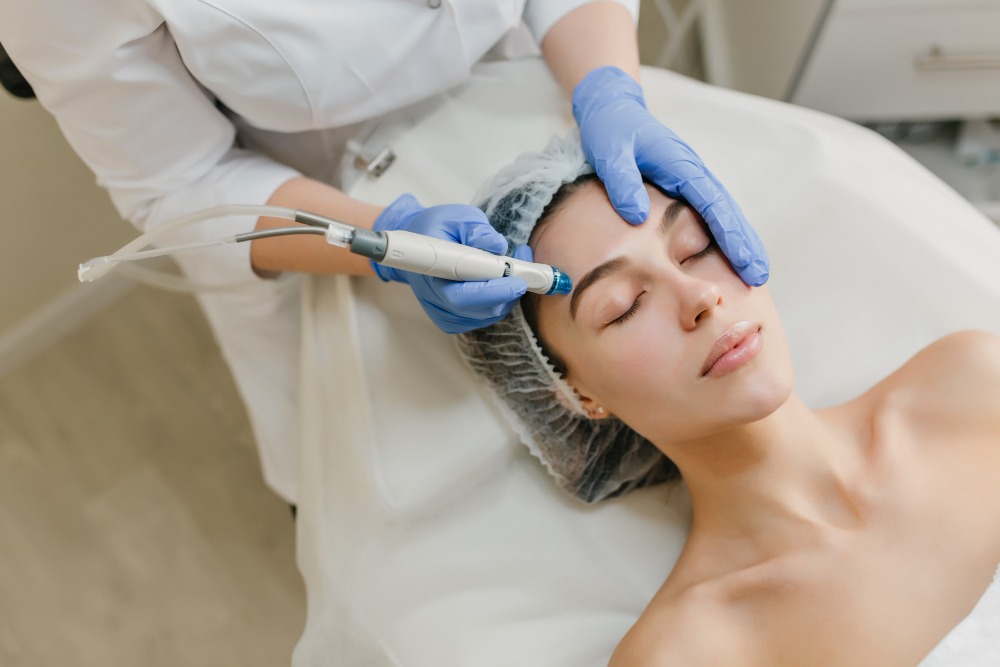
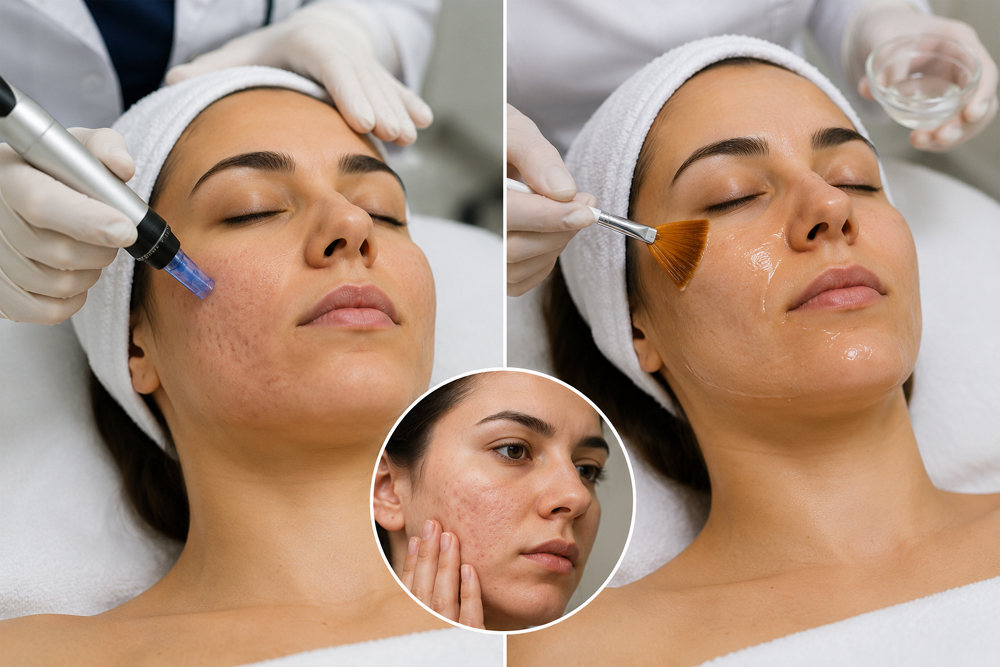
Microneedling: This minimally invasive treatment involves the use of ultrafine, sterile needles. The cosmetologist uses these needles to create micro-injuries on the affected skin area of the patient. Here, the term “micro-injuries” refers to tiny and controlled injuries on the skin. The process promotes natural healing and stimulates collagen production. The level of elastin in the treated skin also rises, making it firmer, smoother, and clearer.
Chemical Peel: As its name suggests, this procedure involves the use of chemical solutions to remove acne scars. The chemicals are used to exfoliate skin areas with acne scars and turn them smoother and clearer. Here, note that unlike microneedling, chemical peel is typically a non-invasive procedure.
Cosmetologists either use glycolic acid or salicylic acid to remove acne scars with chemical peeling. If the scars are more pronounced, the use of trichloroacetic acid is also common.
When to Use Microneedling?
Microneedling is used primarily to remove depressed and atrophic acne scars. Examples include ice-pick, boxcar, and rolling scars. Doctors prescribe this treatment only when there’s no more active acne on the patient’s skin, and the inflammation is also completely gone. This is crucial for preventing the acne-causing bacteria from spreading and causing further breakouts.
The best thing about microneedling is that it works equally well on all skin tones, including darker skin. Patients never experience issues like destruction of the epidermis after undergoing this cosmetic treatment.
Your cosmetologist will decide how frequently you need to undergo the procedure. Usually, one needs to get the treatment once every four to six weeks. Maintaining this gap is crucial to enable collagen maturation.
Microneedling: Things to Remember
- You must undergo at least 3 to 6 sessions of the treatment to see noticeable changes in your skin condition. Your dermatologist and cosmetologist are the best people to decide how many sessions you will eventually need to bid adieu to the problem permanently.
- You can undergo microneedling even if you have sensitive or thin skin. However, always get it done by a qualified, licensed, and experienced cosmetologist and at a trusted facility.
- You should never undergo this therapy when pregnant or suffering from a skin infection.
When to Use Chemical Peels?
Cosmetologists prescribe chemical peels to people struggling with post-acne hyperpigmentation (brown or red acne marks). If it’s about removing shallow and superficial rolling acne scars, chemical peels are extremely effective. In other words, they work best on macular or flat scars. The treatment will not only remove the scars but will also improve your skin texture significantly.
A qualified and experienced cosmetologist can use chemical peels effectively on all skin tones. However, if you have dark skin, your cosmetologist will be more cautious about selecting chemicals for the process to prevent pigment changes.
Like in the case of microneedling, you cannot undergo chemical peeling if you have active acne. However, it is possible to get the treatment even if you have any lingering inflammation. In such cases, doctors usually pick a salicylic acid solution for the treatment. This chemical not only removes acne marks but also reduces the inflammation.
When the goal is removing brown or red acne marks, cosmetologists use glycolic acid peels. They also result in complete skin rejuvenation. As mentioned above, trichloroacetic acid peels are used to remove moderately pronounced scarring, as they help stimulate collagen production.
Chemical Peels: Things to Remember
- For best results, you may need three to six sessions of chemical peeling. Each session should be two to four weeks apart.
- Chemical peels usually don’t work on deep acne scars like ice-pick scars. Cosmetologists recommend more invasive procedures like microneedling for such marks.
- They may cause further breakouts and worsen the associated inflammation if done on active acne. You should avoid the treatment even if you have other forms of active skin infections.
- Exposure to sunlight should be strictly avoided after undergoing chemical peeling.
- Individuals who have active keloids or have had keloids in the past should never undergo chemical peeling.
Restore Your Skin with Expert Dermatology Care
For personalized acne scar treatment and advanced skin care solutions, trust the experienced dermatology team at Magnet Health. Their specialists create customized treatment plans to help you achieve clearer, healthier, and more confident-looking skin.
Conclusion
Allow your cosmetologist to decide which treatment is best for you: microneedling or chemical peels. Additionally, if you want the best results, make sure you are getting the treatment from a qualified and experienced cosmetologist.