

Whenever individuals consider public health, they tend to imagine vaccination, access to clean water, or controlling outbreaks. The same can be said of vision care. Issues with the eye and vision affect learning, employment, self-sufficiency, and safety, and most causes of vision loss are preventable or curable with early detection. The optometrist’s work in public health is to safeguard the population’s vision through a combination of clinical care, prevention, screening, education, and referral pathways that minimise preventable vision loss and health inequities.
Optometrists as front-line “primary eye care” providers
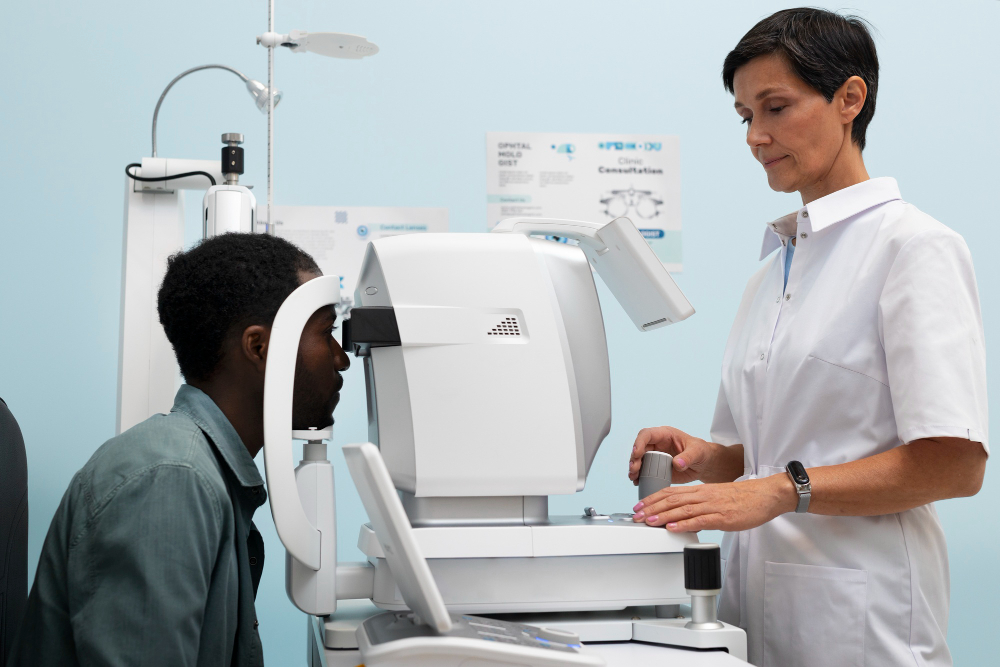
Most people in most societies visit optometrists as their initial health practitioners when they have eye or vision issues. They examine vision, detect refractive errors (such as myopia), assess a patient’s risk of eye diseases, and determine whether a patient should receive advanced medical or surgical care. This front-line access is important in public health, as prior contact usually implies prior diagnoses and reduced complexity.
Public health effect: improved lines of entry of prevention and early detection, particularly of scarce services.
Early detection that protects both sight and overall health
An overall eye test is not just about a person’s need for glasses. Eye drops might indicate symptoms associated with other health problems (such as changes related to diabetes or hypertension that can manifest in the eyes). This is why regular, age-specific eye examinations are widely marketed as a health maintenance practice.
Public health contribution: the earlier the problem is caught, the less time it takes to reduce disability and improve quality of life, and it can result in prompt medical follow-up.
Vision screening programs in schools and communities
Among the most visible contributions of optometry to the population in the area of population screening, the most notable is the screening of children. Untreated vision problems may directly affect reading, attention, and school performance. School eye health programs aim to encourage children to receive a complete exam, refer them for care and follow-up (including obtaining spectacles when necessary).
Optometrists contribute to these programs in the following ways:
- Creation of the screening protocols and referral conditions.
- Training screeners (e.g., teachers or community workers)
- Confirmation of diagnosis and prescription of correction.
- Organising follow-up to minimise missed care following the screening.
Health public outcomes: increased educational achievement and fewer vision issues in the long term.
Preventing avoidable vision loss and eye injury
It is prevention-based public health- public health involves prevention-based activities, including educating patients and communities on protective practices and risk reduction, including:
- Protective eyewear guidance: Safety in the workplace and on the field (eye protection).
- Hygiene of contacts to reduce the risk of infection.
- Protection against UV and lifestyle changes that contribute to eye health in the long run.
Children (e.g., healthy visual habits and outdoor time, where possible). Myopia risk mitigation measures. Impact on public health: the reduction of preventable emergencies and the reduction of long-term complications.
Addressing health equity and access gaps
The loss of vision is not evenly spread. Eye care is delayed by access barriers, cost, transportation, language, insurance gaps, and the lack of clinics and limited access to them, particularly among older adults and in underserved communities. Public health agencies clearly view vision loss as a public health issue, and their actions are guided by equity.
Optometrists are a source of equity by:
- Easy primary eye care and proper referrals.
- Engaging in community outreach campaigns and mobile campaigns.
- Assisting patients in the coverage, saving plan, and continuity of care.
- Joint work with the public programs and nonprofits to increase access to services.
Public health effect: a lower inequality in preventable impairment of vision.
Integrated care and referrals that strengthen the health system
Integrated, people-centred care, i.e., services organised around patients’ actual needs
throughout the lifespan, is becoming a major trend in modern public health. One of such systems is eye care. WHO emphasises the importance of integrated people-centred eye care as one method of reducing inequities and addressing increased eye care demands.
Practically, optometrists enhance integration by:
- Making urgent referrals to suspected cataract cases, threats of glaucoma, retinal disease, or red-eye cases.
- Disclosure of reports to primary care clinicians in the event of any suspicion of systemic risk factors.
- Co-management of chronic diseases (examples: patients with diabetes who should have their eyes closely monitored regularly).
- There has been an improvement in public health, with smoother care pathways, fewer lost-to-follow-up cases, and better outcomes.
Data, surveillance, and public awareness
Public health is based on population-level measurement of problems. Vision surveillance systems and research help policymakers determine where vision loss is increasing, who is most affected, and which interventions are effective. Optometrists can also help by providing reports, conducting research, and partnering with campaigns to raise awareness among people of the need for eye check-ups, the importance of preventive measures, and the need to do so at the right time.
Improvement in community health: increased planning, improved efficiency in resource allocation, and reduced community-level interventions.
Comprehensive Eye Care Services in the Bronx at Magnet Health NY
In need of convenient, patient-centred eye care in the Bronx, Magnet Health NY provides access to optometry within a trusted multispecialty clinic, making it easier to organise your eye care with the rest of your health care. They are located with an optometrist, and their vision is to offer easily accessible appointments and one-stop comprehensive services.
Final thoughts
Optometrists contribute significantly in the health of the populations as far as vision influences almost all aspects of everyday life, including education, employment, self-reliance, and safety. By making diagnoses at the earliest stage, screening at schools and communities, prevention education, outreach that is based on equity, and combined referral pathways, optometry will decrease the preventable loss of sight and enhance the good health in general.