


Are you wondering whether your genes are responsible for your flatfoot? If yes, this write-up is a must-read for you. While flatfoot is often a genetic issue, it can also be a result of other factors like age, lifestyle, and certain medical conditions. Read through the section below to learn more about this structural disorder and its link with genes.
What Is Flatfoot?
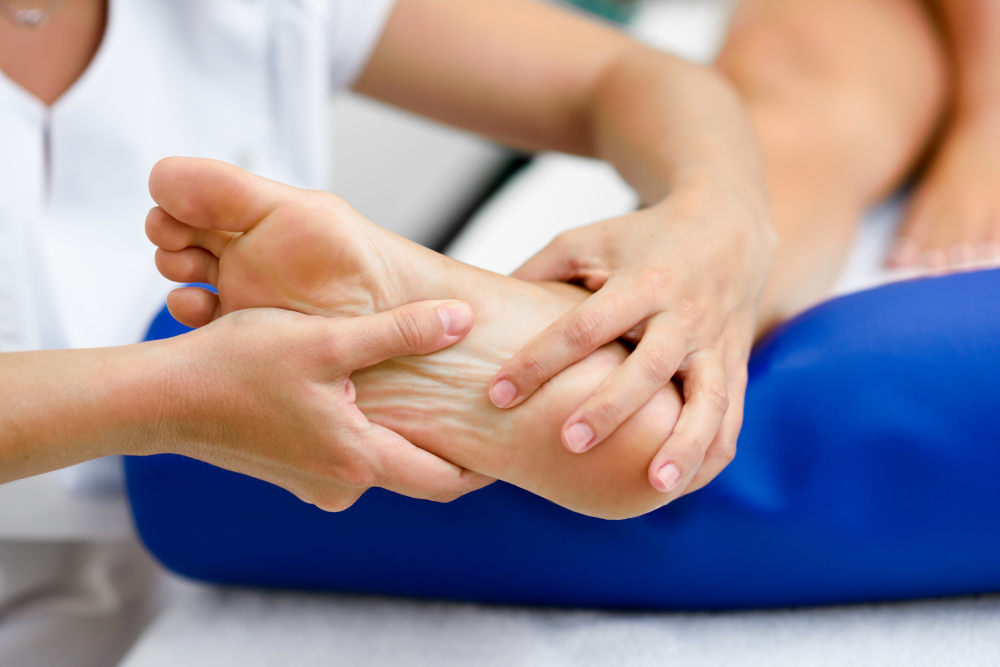
Pes planus, which is more commonly referred to as flatfoot, is a structural issue of the human feet. It occurs when the arches underneath your feet are low, absent, or have collapsed. Flatfoot can be of two types: flexible and rigid. If you have a flexible flatfoot (the more common variant), your arch will be visible whenever you sit or stand on your toes but will disappear the moment you put your body weight on the entire foot. For individuals with rigid flatfoot, on the other hand, the arch stays flat irrespective of their action.
The condition is usually painless (some may experience pain), but it will require treatment. If you ignore the problem, it can cause structural changes to your ankles/feet. An untreated flatfoot can also lead to severe joint and tendon strain. Functional limitation is another common consequence of untreated flatfoot.
How will one know whether he or she has flat feet? You must be mindful of certain changes. These may include one or more of the following:
- Discomfort and pain in your ankle, arch, heel, and/or the outer half of your foot
- Secondary pain, i.e., pain in your hips, knees, calves, lower back (this happens when your body tries to compensate for the deformity)
- A persistent swelling along your tibial tendon (your ankle’s inner side, to be more precise)
- Legs that easily get tired, particularly after walking or standing for some time
- Altered alignment of your foot and heel
- Toes that point outwards
- Visible flatness
How Are Your Genes Related to Your Flatfoot?
When flatfoot is genetic, the problem tends to have its roots in various inherited traits. These may include a connective tissue disorder, ligament laxity, a problem with your bone structure, and so on. Here are the most common genetic factors responsible for a flatfoot:
- Connective Tissue Disorders: Some connective tissue disorders can result in weakening of the ligaments that form your arch. Examples include Marfan syndrome and Ehlers-Danlos syndrome.
- Inherited Structural Deformities: It’s common for children to inherit problems like hypermobility and double-jointedness from their parents. These problems increase one’s chances of developing a flatfoot.
Your flatfoot may also be a result of a genetic deformity called tarsal coalition. A patient is diagnosed with tarsal coalition when two or more bones in his or her feet fuse or grow together to form a rigid flatfoot.
- Genetic Predisposition: Multiple studies have revealed that some genetic markers can be responsible for increasing one’s chances of having absent or low arches.
- Congenital Tendon/Muscle Defects: You may develop a flatfoot if you have inherited problems like tight calf muscles and Achilles tendons from your parents.
Here, you must note that when genes are responsible for flatfoot, the problem tends to be present right from the time of birth. If not, it will at least develop very early in the child’s life.
How to Manage Genetic Flatfoot?
As genetic flatfoot becomes evident right after birth or at a very young age, sufferers learn to live with it. However, getting the little one checked by a medical expert is essential to avoid complications. Here are a few methods doctors use to manage flatfoot.
- Special Footwear: Shoes with cushioning and strong arch support are usually beneficial.The child may also need to wear customized orthotics to get rid of discomfort and pain and gain some flexibility.
- Exercises and Physical Therapy: Performing exercises like arch lifts, toe curls, and calf raises makes the muscles forming the arch stronger.These muscle-strengthening exercises should be performed along with stretching exercises that focus on the Achilles tendon and calf muscles. This combination helps improve flexibility. The exercise sessions should be followed by a meticulous massage using a golf or tennis ball. This step helps mobilize the collapsed arch.
- Lifestyle Management: Doctors always advise parents to be mindful of their child’s weight. They seem to be stricter when a baby is diagnosed with flat feet. Other than that, these babies are required to avoid high-impact activities like jumping and running as much as possible. However, to maintain healthy body weight, they must engage in cycling, swimming, and other low-impact activities.
Conclusion
If you suspect that your baby might have a flatfoot or if he or she has already been diagnosed with the problem, contact the podiatry department of Magnet Health. The same stands true for adults with a similar problem. The department is represented by the most experienced and qualified podiatrists in the US.
Visiting the department at the right time can help you learn whether corrections are possible and get the job done as quickly as possible. If reversing your flatfoot is not an option, your podiatrist will tell you the best way to manage it.