

Good vision is an eye that is more than just an eye, but one that is good and healthy to help you maintain your lifestyle, work, and wellness. All eye checks, though, are not the same. The two frequently used terms in words when visiting clinics and optometry offices are comprehensive eye exam and routine eye exam. Being aware of the variant will affect your eye work, long-term vision, and prompt identification of how severe issues can be.
In this post, we will point out what the different types of exams entail, who should take what one, and why a particular kind of exam is going to be better for your eyes, depending on the circumstances.
What Is a Routine Eye Exam?
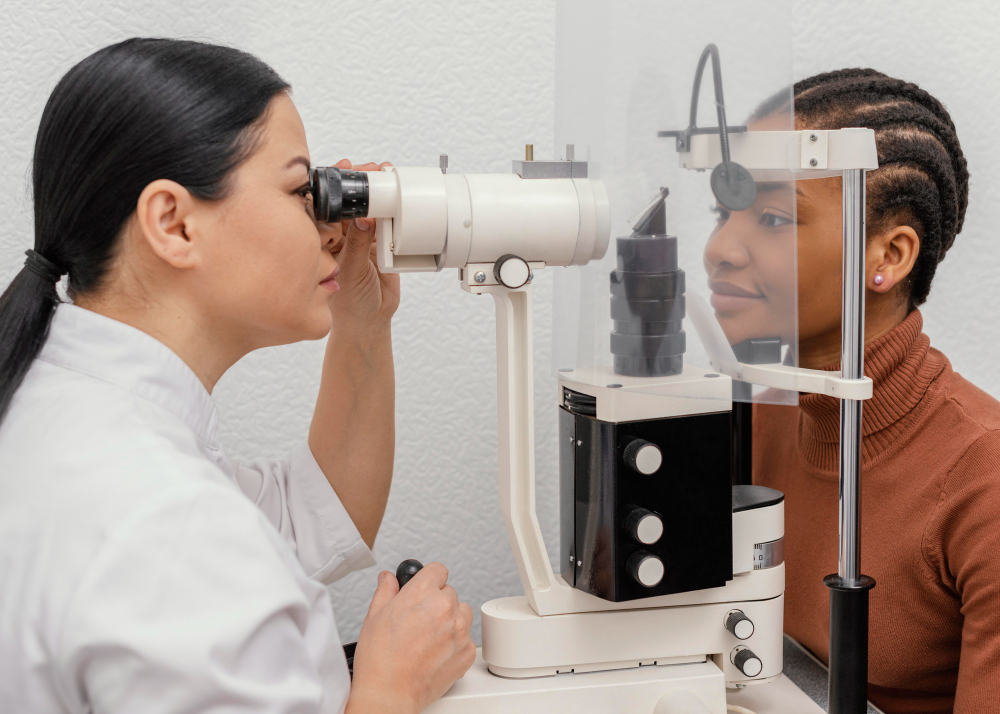
Most people will perceive an eye check-up as a routine eye test. It is mostly about your vision, which is typically examining how well you can see at various distances and whether you are in need of eyeglasses or contact lenses.
Routine Eye Exam Includes:
- Details of the letter chart can be quickly seen by looking at words.
- Testing farsightedness, farsightedness, and near sightedness.
- In other instances, simple eye health screenings.
These tests are fast and usually prescription-specific and basic vision tests. They come in handy, particularly when you are there to replenish your glasses or contact lens prescriptions. But they do not necessarily go into the inner workings and well-being of your vision.
Routine examination does not provide medical tests; it may overlook the presence of eye diseases or underlying illnesses that can impact the eyes due to a lack of complex check-ups.
What Is a Comprehensive Eye Evaluation?
A full exam of the eye is much more detailed and in-depth than a check-up. It is done by an optometrist or ophthalmologist and is a procedure that consists of a set of specialized tests to determine, not only how comfortably you can see, but also how well your eyes are in general.
Key Tests in a Comprehensive Exam
A general exam usually incorporates:
- Visual acuity testing
- Refraction and determination of prescription.
- Test of muscular coordination of the eyes.
- The depth perception and color sense examinations.
- To check the internal structures of the eyes, the pupil is dilated.
- Tonometry to identify intraocular pressure.
- Assessment of retina, optic nerve, and blood vessels.
Due to this range of testing, a thorough examination can detect problems that are not noticed with a standard vision check.
Head-to-Head: Key Differences at a Glance
| Feature | Routine Eye Exam | Comprehensive Eye Exam |
| Primary goal | Checks vision clarity | Checks vision + overall eye health |
| Depth of testing | Basic | In-depth |
| Disease detection | Limited | Detects early stages of glaucoma, cataracts, macular degeneration, etc. |
| Internal health check | No | Yes |
| Systemic health clues | Rare | Often possible |
| Duration | Short | Longer, more detailed |
The Importance of a Comprehensive Eye Exam.
Your eyes can conceal the initial symptoms of illness even when you have perfect vision. Diseases such as glaucoma, diabetic retinopathy, or macular degeneration do not usually manifest their effects until they are severe. A thorough eye test will help the doctors identify them early enough and work towards it.
This is one reason why eye care experts recommend them on a regular basis:
1. Early Identification of Eye Diseases.
Most severe eye diseases have no symptoms. The earlier it is detected, the better, and there is a greater chance of slowing down.
2. Overall Health Insights
Since the blood vessels and nerves in the eye can be seen through an eye examination, one may notice signs of internal health problems, such as diabetes or hypertension, without actually feeling anything.
3. Personalized Care
Extensive testing assists clinicians in tailoring vision remedies and treatment interventions on the basis of your specific eye characteristics, such as muscle coordination and depth perception.
Associating Vision and Better Eye Care
Also, when it comes to long-term eye health, with a comprehensive eye exam, you get the whole picture, not a snapshot of the eye health today. It is not just about looking at letters on a chart, but a thorough health examination that will guard you in the long term.
In order to dive into the highest quality eye care services, such as customized eye exams in accordance with your needs. Their expert optometry clients blend high-level diagnostics with the care they always provide to leave your vision clear and ensure your eyes maintain a healthy standard.
Final Takeaway
Regular and complete eye screening is nothing alike, though it has its role to play. An annual check-up will allow you to see clearly, and a full-scale examination will allow you to remain fit. In the most optimal approach to your eye care, either as an older person or with unremitting health issues, full scans are seriously worth adding to your annual diagnostic check-up. Begin living your vision now — because your eyes are worth it.