
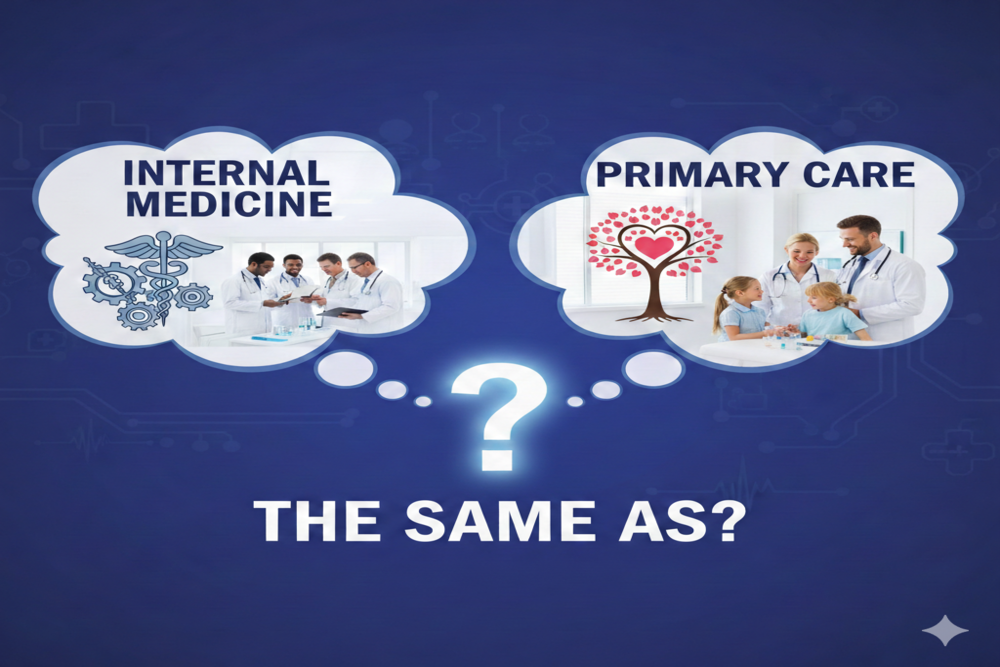
When selecting a healthcare provider, many of us consider if the term internal medicine and primary care is synonymous. These terms are frequently used in place of each other, but they are not the same thing. Though they are similar, they also are different in terms of scope, training, and patient populations served.
Learning the differences between specialty and primary care can be effective in what kind of doctor you select to see based on your age, health needs, and medical conditions.
What Is Internal Medicine?
Internal medicine is a medical specialty that embodies the prevention, diagnosis, and treatment of adult diseases. Physicians in this specialty are called internists, and they undergo lengthy training on how to manage complicated diseases that involve internal organs.
Instead, if they can see the patients, internists mostly see patients over the age of eighteen. They are particularly good at identifying chronic disease and helping patients with more than one health problem coordinates their care. This means complete approach towards body and does not target a single organ or condition.
Internal medicine doctors may see patients with the following common conditions:
- Diabetes and error prevention
- Heart and lung diseases
- Gastrointestinal disorders
- Kidney problems
- Autoimmune conditions
- Chronic infections
Internists are particularly useful if you have a chronic disease or multiple medical problems because of the complexity of the cases they deal with.
What Is Primary Care?
Primary care is the first stage of general healthcare; it is the first access point in the medical system. A primary care provider will help with regular health problems, preventative care, and ongoing care as needed.
So primary care is not a single specialty. This encompasses a range of physician types, including:
- Physicians of family medicine
- Internal medicine physicians
- Pediatricians
- Geriatric specialists
In contrast to internal medicine, which treats only adults, primary care providers on the other hand, can see patients of all ages, based on their specialty.
Your primary care physician will assist you with:
- Regular examinations and tests
- Common ailments and injuries
- Preventive health services for counseling
- Vaccinations
About Common Conditions
They also refer patients to specialists for more advanced care.
Differences Between Internal Medicine and Primary Care
While internal medicine IS a primary care specialty, there are significant distinctions.
Patient Age Range
Internal medicine doctors treat adults only primary care physicians might see children, adults, and seniors depending on their training.
Scope of Care
Primary care is more general and is concerned with general health and prevention. Internal medicine focuses on the diagnosis and management of complex adult diseases.
Training Focus
Internists have specialty training in adult medicine/chronic disease management. PCPs typically have more general training that varies by age and health needs Complexity of Cases
An internist is helpful for patients with multiple or chronic diseases, while primary care is a wider category and any primary care provider may be seen as routine care.
Comprehensive Internal Medicine Care
Magnet Health offers a wide range of internal medicine services to meet all your adult healthcare needs both in prevention and long-term health. Resolute specialists treat complicated diseases, chronic illnesses, and individualized therapy plans.
How Does Internal Medicine Fit into Primary Care?
Internal medicine is just a subspecialty of primary care. Internists are often primary care providers for adults who require long-term health care and assistance with preventive care.
The difference primarily is that internists have more extensive training in complex disease management, whereas other primary care providers may be more focused on general wellness and family health through all stages of life.
When to See an Internist?
You may want to see an internal medicine doctor if you:
- You are still sick with those long term health conditions.
- What you require Management of adult diseases specialized
- You need coordination of several treatments.
- You want a physician who specializes in adult medicine.
When Do You Only Need a Primary Care Provider
- If you are okay with a more general primary care physician, that could work.
- It requires periodic examinations and preventive treatment.
- You are moderately or infrequently unwell.
- You just want to get family healthcare from a single source.
- If you have severe chronic diseases, you do not have.
How to Select the Best Option
The differences between internal medicine and general primary care are about your health.
Consider these factors:
- Your age and medical history
- When on notice chronic conditions
- Your need for adult care specialist
- Your Desire for an ongoing health relationship
Simply put, internal medicine doctors and primary care providers are both important pieces of the care puzzle to keep you healthy and get the continuity of care you need.
Conclusion
While often intertwined, internal medicine and primary care is not synonymous. Internal medicine treats only adults, and specialization is more common in this branch of medicine and their emphasis on managing complex disease is quite different from the public health orientation of primary care, which provides wide-ranging healthcare for all ages. These differences can inform which provider is right for your own journey with your health.
Frequently Asked Questions
Does internal medicine qualify as primary care?
Yes. Internal medicine is a branch of primary care that is specifically focused on adult patients and complex diseases.
Is an Internist a Primary Care Physician?
Absolutely. At this stage, adults are many times using internists as their main health care providers for routine medical care.
Chronic condition treatment by primary doctors?
Sure, although your internist often has special training in the treatment of complex or many chronic diseases.
Is internal medicine better than primary care?
Neither is inherently better. The answer really depends on your age, medical complexity, and health needs.